
Collection: Portable Oxygen Concentrators with Continuous Flow

-
On Sale

OxLife Liberty2 - True Continuous Flow - Portable Oxygen Concentrator
From $2,795.00
-
On Sale
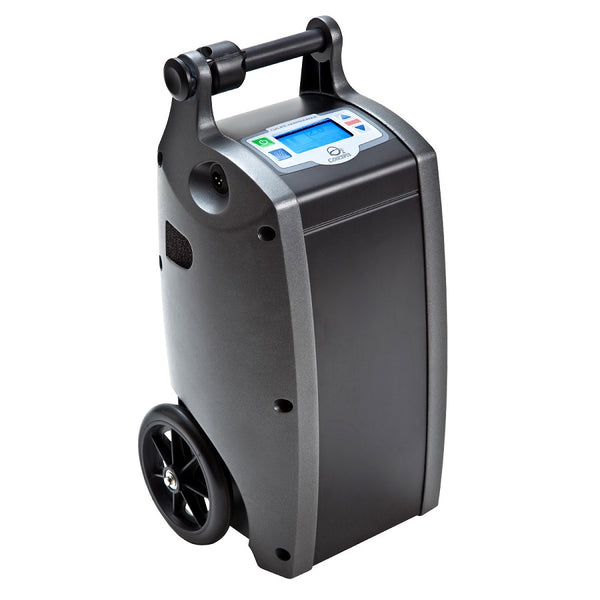
O2 Concepts OxLife Independence - Portable Oxygen Concentrator
From $2,995.00
-

GCE Zen-O Portable Oxygen Concentrator
From $2,285.00
-
On Sale

CAIRE SeQual Eclipse 5 - Portable Oxygen Concentrator
From $2,995.00


Steady, prescribed oxygen — for sleep, exercise, and higher-demand needs
While there are many portable oxygen concentrators on the market with pulse flows, some patients don't realize there are also devices that incorporate constant or continuous flow settings. These are very useful during sleeping hours, and they also provide portable oxygen for those with more serious oxygen needs — like patients with chronic obstructive pulmonary disease (COPD).
At Main Clinic Supply, we have multiple portable oxygen concentrators with continuous oxygen flows. These are useful for patients who want to stay active, and our continuous flow portable oxygen concentrators are all FAA-approved for use on airplanes. Here's a quick rundown of the devices we offer.
Fast Facts: Continuous Flow POCs
- What "continuous flow" means: A steady stream of oxygen regardless of your breathing rate — measured in liters per minute (LPM).
- Best for: Sleep, higher oxygen prescriptions, and patients with CPAP or BiPAP machines.
- FAA approved: All our continuous flow POCs are approved for air travel.
- Trade-off vs. pulse: Continuous flow uses more battery — but it's the only delivery method that works reliably during sleep.
How continuous flow works
Continuous flow in a portable oxygen concentrator (POC) refers to a mode of oxygen delivery where the device emits a steady stream of oxygen, regardless of the user's rate of breathing. This is particularly beneficial for individuals who require a constant supply of oxygen to maintain optimal saturation levels.
In continuous flow mode, the concentrator draws in ambient air, filters out nitrogen, and compresses the purified oxygen. This oxygen is delivered through a nasal cannula at a consistent rate measured in liters per minute (LPM). The flow rate is adjustable to match the user's prescribed oxygen requirements.
Continuous flow is often recommended for individuals who use oxygen while sleeping, those with lower breath rates, or those with higher oxygen demands. It also supports compatibility with oxygen delivery accessories such as CPAP or BiPAP machines.
Due to the constant oxygen output, POCs operating in continuous flow mode generally consume more power and offer shorter battery life compared to pulse models. Their reliability and suitability for various medical conditions still make them a preferred choice for many.
What to consider in a continuous flow unit
| Factor | Why it's important |
|---|---|
| Additional flow settings |
|
| FAA approval for air travel |
|
| Battery life expectancy |
Important note: continuous flow POCs tend to drain battery faster, thanks to the constant outflow of oxygen. Some models allow "hot swapping" batteries, which extends usable battery life by letting you switch in new batteries when the previous one is depleted. |
| Charging and plug-in method |
|
| Sound levels |
Lower sound levels make the device more comfortable when:
|
| Carrying methodology |
|
Why continuous flow is useful in a portable oxygen concentrator
When evaluating portable oxygen concentrator options, two primary delivery methods are typically available: continuous flow and pulse dose. Continuous flow systems provide a steady stream of oxygen regardless of the user's inhalation, delivering oxygen consistently at an adjustable rate, as the name implies.
Pulse flow delivery faces a problem when a patient sleeps, since this type of flow setting relies on the patient's breathing. The slower and shallower breaths that happen at night can cause the portable concentrator not to trigger. The steady stream of oxygen from a continuous flow concentrator ensures the patient receives an adequate level of oxygen during rest.
Compatibility with CPAP/BiPAP machines
Continuous flow portable oxygen concentrators are the only portable oxygen concentrators compatible with CPAP/BiPAP machines. This benefits patients with sleep apnea who can use a mask with an oxygen port for connectivity with their portable concentrator.
Higher oxygen needs
Certain conditions like COPD require higher levels of oxygen that aren't practical with a machine providing only pulse dose flows. As a general rule, continuous oxygen concentrators designed for portability have higher LPM capabilities.
When the patient is exerting themselves
Strenuous physical activity increases the oxygen needs of POC users. While some machines have pulse flows that accommodate physical activity, the irregular breathing patterns that come with exercise can make pulse flows less reliable. The steady stream of oxygen from a continuous unit ensures patients engaged in rigorous activity get the consistent oxygen they need.
If a patient is in respiratory distress
The constant flow of oxygen these POCs provide is especially valuable for patients experiencing emergency respiratory situations. It can stabilize a patient and potentially help prevent hypoxia.
Quick reference guide
Choosing the right portable oxygen concentrator with continuous flow settings can be a daunting task — we're here to make it simple. Our quick reference guide outlines the primary advantages of each model so you can compare them based on your lifestyle and oxygen therapy needs.
Highest quality: CAIRE SeQual Eclipse 5
With a continuous flow rating of 3 LPM and pulse flows ranging from 1 to 9, the CAIRE SeQual Eclipse 5 is a fully-featured portable oxygen concentrator. It's FAA approved for airline use and has CPAP compatibility.
Its autoSAT technology adjusts pulse settings as the patient's breathing changes, ensuring the prescribed amount of oxygen is always administered.
Best budget: GCE Zen-O
The GCE Zen-O is on the heavier side at 10 pounds, but it's one of the more budget-friendly continuous flow oxygen concentrators available.
It provides six pulse dose settings in addition to its 2 LPM continuous flow. It's CPAP compatible and includes a carry bag and case.
Lightweight: OxLife Liberty2
While continuous flow settings normally add weight to a unit, the OxLife Liberty2 keeps its weight down to about seven pounds. It also has its own carrying bag, which adds to its portability.
Main Clinic Supply testimonials
"This has been the best online buying experience I have ever done. Unlike other places when I was shopping and reading reviews, Main Clinic Supply answered the phone right away every time. My package said overnight before 10:30 AM — it was here 10:15 AM the next day. Can't say enough good things. They realize you need your oxygen now, and they get it to you fast."
— John, WA
"I was in need of purchasing a portable oxygen concentrator. The specialist I chatted with was Leo Castro. He was amazing.
He answered all my questions, made suggestions, and never once did I feel any pressure to make a purchase.
He expedited the shipment and kept track of where it was so he could let me know. Then followed up to make sure everything I ordered had arrived safely and if I had any questions.
I am SO GLAD I chose Main Clinic Supply and for Leo. Thank you, MCS!"
— Molly M.
"Just received my new Inogen Rove 6 and could not be happier. The ordering process was made so simple and easy, and the customer service from my specialist Ben Sletta was amazing. This was my second purchase through Main Clinic Supply and I can confidently say they are exceptional and have a very happy customer for life. Thank you :)"
— Laurie L.
Speak to one of our Oxygen Specialists
Call 1-800-775-0942 and our Oxygen Specialists will help you match your prescription, lifestyle, and budget to the right system. We answer the phone — and we're here to help.
Disclaimer: Portable oxygen concentrators are FDA-cleared medical devices that require a prescription. Always work with your physician on prescribed oxygen settings, delivery method (pulse vs. continuous flow), and pulmonary care plan. This page is for educational purposes only and is not medical advice.